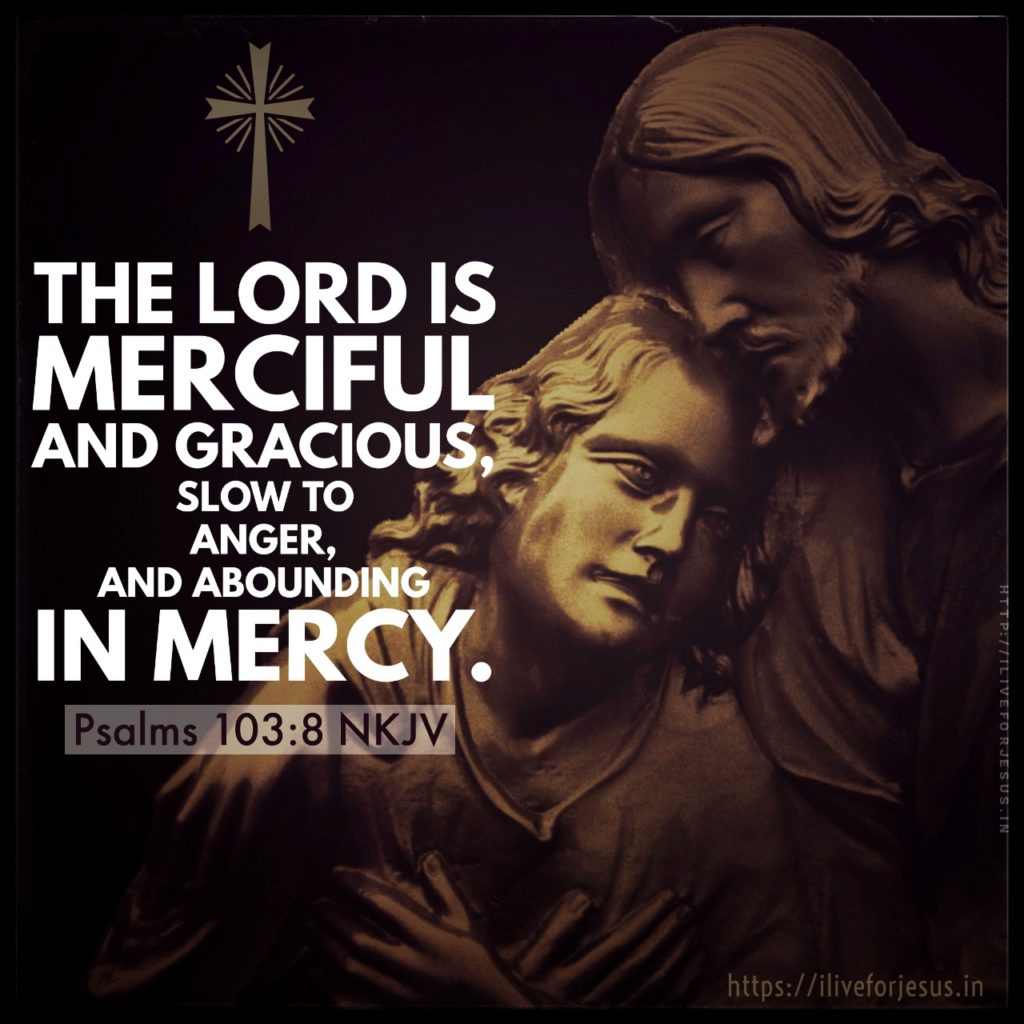
“The LORD, the LORD, a God merciful and gracious,
slow to anger, and abounding in steadfast love and faithfulness,
keeping steadfast love for thousands,
forgiving iniquity and transgression and sin.”
(Exodus 34:6–7, ESV)
We live in a world that rewards strength, success, and self-sufficiency. Weakness is despised. Failure is mocked. Neediness is hidden.
But the God of the Bible reveals Himself differently.
When Moses asked to see God’s glory, God did not display raw power or blinding holiness first. Instead, He proclaimed His name—and the first words out of His mouth were about mercy and grace.
This is who God is. Not distant. Not indifferent. Not harsh.
He is the God who bends low.
Charles Spurgeon captured this beautifully:
“Mercy is God’s tender heart toward the miserable.
Grace is His free favor toward the guilty.”
— Charles Spurgeon
If you are broken, burdened, guilty, or ashamed—these words are for you.
1. God’s Own Self-Description: “The LORD, Merciful and Gracious” (Exodus 34:6–7)
In Exodus 33, Moses makes a bold request:
“Please show me your glory.”
(Exodus 33:18, ESV)
God responds by hiding Moses in the cleft of a rock and passing by, proclaiming His name. This is one of the most important passages in all of Scripture—God defining Himself:
“The LORD passed before him and proclaimed,
‘The LORD, the LORD, a God merciful and gracious,
slow to anger, and abounding in steadfast love and faithfulness,
keeping steadfast love for thousands,
forgiving iniquity and transgression and sin,
but who will by no means clear the guilty,
visiting the iniquity of the fathers on the children and the children’s children,
to the third and the fourth generation.'”
(Exodus 34:6–7, ESV)
Notice the order:
- First: Mercy and grace.
- Second: Steadfast love and faithfulness.
- Third: Forgiveness of sin.
- Last: Justice and judgment.
This is not accidental. God leads with mercy. He delights in it.
“Who is a God like you, pardoning iniquity and passing over transgression
for the remnant of his inheritance?
He does not retain his anger forever,
because he delights in steadfast love.“
(Micah 7:18, ESV)
God does not begrudgingly forgive. He delights in showing mercy.
This proclamation is quoted or echoed over 30 times in the Old Testament. It becomes Israel’s anthem, their go-to reminder of who God is when they fall, fail, and forget.
And it is still true today.
2. Mercy for the Miserable: What Mercy and Grace Actually Mean
We often use “mercy” and “grace” interchangeably, but they emphasize slightly different truths.
Mercy = Not getting what we deserve
Mercy withholds judgment. It relieves suffering. It moves toward the miserable.
“The LORD is merciful and gracious,
slow to anger and abounding in steadfast love.
He will not always chide,
nor will he keep his anger forever.
He does not deal with us according to our sins,
nor repay us according to our iniquities.“
(Psalm 103:8–10, ESV)
If God gave us what we deserved, we would be consumed. Mercy says, “I will not treat you as your sins deserve.”
Grace = Getting what we don’t deserve
Grace goes further. It is God’s unmerited favor. It gives gifts to the guilty, life to the dead, hope to the hopeless.
“For by grace you have been saved through faith.
And this is not your own doing; it is the gift of God,
not a result of works, so that no one may boast.”
(Ephesians 2:8–9, ESV)
Grace does not wait for us to improve. It meets us where we are and lifts us up.
Martin Luther said it plainly:
“God does not love us because we are valuable.
We are valuable because God loves us.”
— Martin Luther
Mercy says, “I will not punish you.”
Grace says, “I will bless you.”
Both flow from the heart of a God who is rich in mercy.
3. From Dead to Alive: God’s Rich Mercy in Ephesians 2:1–7
Paul paints a before-and-after portrait of God’s mercy:
“And you were dead in the trespasses and sins in which you once walked,
following the course of this world, following the prince of the power of the air,
the spirit that is now at work in the sons of disobedience—
among whom we all once lived in the passions of our flesh,
carrying out the desires of the body and the mind,
and were by nature children of wrath, like the rest of mankind.But God, being rich in mercy, because of the great love with which he loved us,
even when we were dead in our trespasses, made us alive together with Christ—
by grace you have been saved—
and raised us up with him and seated us with him in the heavenly places in Christ Jesus,
so that in the coming ages he might show the immeasurable riches of his grace
in kindness toward us in Christ Jesus.”
(Ephesians 2:1–7, ESV)
Let’s break this down:
a) We Were Dead
Not sick. Not injured. Dead.
- Spiritually lifeless.
- Enslaved to sin.
- Under God’s wrath.
Dead people can’t improve themselves. They can’t pull themselves together. They need resurrection.
b) But God…
Two of the most beautiful words in Scripture.
- “But God, being rich in mercy…”
- “Even when we were dead…”
- “Made us alive together with Christ.”
God did not wait for us to get better. He acted while we were dead. That’s mercy. That’s grace.
c) Made Alive, Raised Up, Seated with Christ
God doesn’t just forgive us and leave us where we are. He:
- Makes us alive (regeneration).
- Raises us up (resurrection life).
- Seats us with Christ (adoption, identity, security).
We are not just pardoned criminals. We are beloved children, seated at the King’s table.
J.I. Packer writes:
“The gospel is not good advice; it is good news.
It announces what God has done, not what we must do.”
— J.I. Packer, Knowing God
This is the riches of God’s mercy—unearned, unstoppable, unending.
4. Real Sins, Real Compassion: He Knows Our Frame (Psalm 103:13–14)
God’s mercy is not naive. He is not surprised by our sin or blind to our failures.
He knows exactly what we are.
“As a father shows compassion to his children,
so the LORD shows compassion to those who fear him.
For he knows our frame;
he remembers that we are dust.“
(Psalm 103:13–14, ESV)
God knows:
- How weak we are.
- How prone to wander.
- How easily we fall.
And still, He shows compassion.
This does not mean God ignores sin or treats it lightly. It means He deals with us as a loving Father, not a harsh tyrant.
He does not expect perfection before He shows mercy. He gives mercy so that we can grow toward maturity.
Dane Ortlund reflects on this tenderness:
“The heart of Christ is the most wonderfully encouraging truth in all the Bible:
that the very presence we seek to avoid due to our sin and shame
is the presence that runs to us in our sin and shame.”
— Dane Ortlund, Gentle and Lowly
Jesus does not turn away from the broken. He moves toward them.
5. Living Under Mercy: Confession, Assurance, and Patience with Others
If we have received mercy, how should we live?
a) Run to God in Confession, Not Away from Him
When we sin, our instinct is to hide—just like Adam and Eve in the garden.
But God’s mercy invites us to come out of hiding and into the light.
“If we confess our sins, he is faithful and just to forgive us our sins
and to cleanse us from all unrighteousness.”
(1 John 1:9, ESV)
God is not shocked by your sin. He already knows. And He is ready to forgive.
Don’t run from God. Run to Him.
Martin Luther said:
“Be a sinner and sin boldly, but believe and rejoice in Christ even more boldly.”
— Martin Luther (often misunderstood, but his point is: Don’t let fear of sin keep you from Christ)
We don’t minimize sin. But we don’t let guilt keep us from the only One who can cleanse us.
b) Live with Assurance, Not Fear
Because of God’s mercy, we do not live in constant terror of rejection.
“There is therefore now no condemnation for those who are in Christ Jesus.”
(Romans 8:1, ESV)
God’s mercy is not:
- Fragile (it won’t break).
- Conditional (it doesn’t depend on your performance).
- Temporary (it doesn’t expire).
You are safe in Christ. Forever.
“Let us then with confidence draw near to the throne of grace,
that we may receive mercy and find grace to help in time of need.”
(Hebrews 4:16, ESV)
When you struggle, when you stumble, when you sin again—come boldly. God’s throne is not a throne of condemnation; it is a throne of grace.
c) Extend Mercy to Others
Jesus made this clear:
“Blessed are the merciful, for they shall receive mercy.”
(Matthew 5:7, ESV)
And again:
“Be merciful, even as your Father is merciful.”
(Luke 6:36, ESV)
If God has been patient with you, be patient with others.
If God has forgiven your debts, forgive those who sin against you.
If God has shown you compassion, show compassion to the broken around you.
This doesn’t mean we excuse sin or enable harm. It means we reflect the heart of God in how we treat people.
Timothy Keller writes:
“We are more sinful and flawed than we ever dared believe,
yet more loved and welcomed than we ever dared hope.”
— Timothy Keller
When we grasp this, we stop being harsh judges and become mercy-givers.
Practical Steps to Live in God’s Mercy
1. Meditate on Exodus 34:6–7 and Psalm 103
These passages are God’s self-portrait. Read them slowly. Pray them back to God. Let them reshape how you see Him.
2. Confess Sin Quickly and Honestly
Don’t let guilt pile up. Come to God daily with your sins, knowing He is merciful and gracious.
3. Replace “I Should” with “I’m Loved”
When shame whispers, “You should be better by now,” answer with truth:
- “I am deeply loved” (1 John 4:10).
- “I am forgiven” (Colossians 2:13–14).
- “I am being changed” (2 Corinthians 3:18).
4. Ask God: “Who Needs Mercy from Me Today?”
Maybe it’s:
- A spouse who hurt you.
- A child who disobeyed.
- A coworker who failed.
- A friend who disappointed you.
Show them the mercy you’ve been shown.
5. Praise God for His Mercy
Don’t take it for granted. Thank Him. Sing to Him. Tell others about Him.
“Bless the LORD, O my soul,
and forget not all his benefits,
who forgives all your iniquity,
who heals all your diseases,
who redeems your life from the pit,
who crowns you with steadfast love and mercy.“
(Psalm 103:2–4, ESV)
Recommended Books on God’s Mercy and Grace
- Dane Ortlund – Gentle and Lowly: The Heart of Christ for Sinners and Sufferers
A deeply comforting exploration of Christ’s tender heart toward the broken. - J.I. Packer – Knowing God
Especially the chapters on God’s grace and goodness—clear, warm, and deeply pastoral. - Sinclair Ferguson – The Whole Christ: Legalism, Antinomianism, and Gospel Assurance
Explores how grace frees us from both legalism and license. - Bryan Chapell – Holiness by Grace
Shows how God’s grace, not our striving, is the foundation for godly living. - Philip Yancey – What’s So Amazing About Grace?
A compelling, readable introduction to the scandalous generosity of God’s grace.
A Hymn of Mercy and Grace
Let these timeless words become your prayer and praise:
And Can It Be That I Should Gain
And can it be that I should gain
An interest in the Savior’s blood?
Died He for me, who caused His pain—
For me, who Him to death pursued?
Amazing love! How can it be,
That Thou, my God, shouldst die for me?He left His Father’s throne above
So free, so infinite His grace—
Emptied Himself of all but love,
And bled for Adam’s helpless race:
‘Tis mercy all, immense and free,
For O my God, it found out me!No condemnation now I dread;
Jesus, and all in Him, is mine;
Alive in Him, my living Head,
And clothed in righteousness divine,
Bold I approach th’eternal throne,
And claim the crown, through Christ my own.
Beloved, you serve a God who is merciful and gracious—slow to anger, abounding in steadfast love. He does not hold your sins against you. He bends low to lift you up. Rest in His mercy. Walk in His grace. And share it freely with a world desperate for hope.
Other Resources Available:
- FaithAnswersPress.net: Grow in your faith and share your hope with others. Find biblical answers about the Christian faith. VISIT THE SITE NOW
- Download the FAQs of Faith app for easy access to Faith Answers Press LLC websites, answers to spiritual FAQs, and a daily faith-boosting podcast. DOWNLOAD NOW