The Preeminence of Christ: He Is Before All Things, and In Him All Things Hold Together
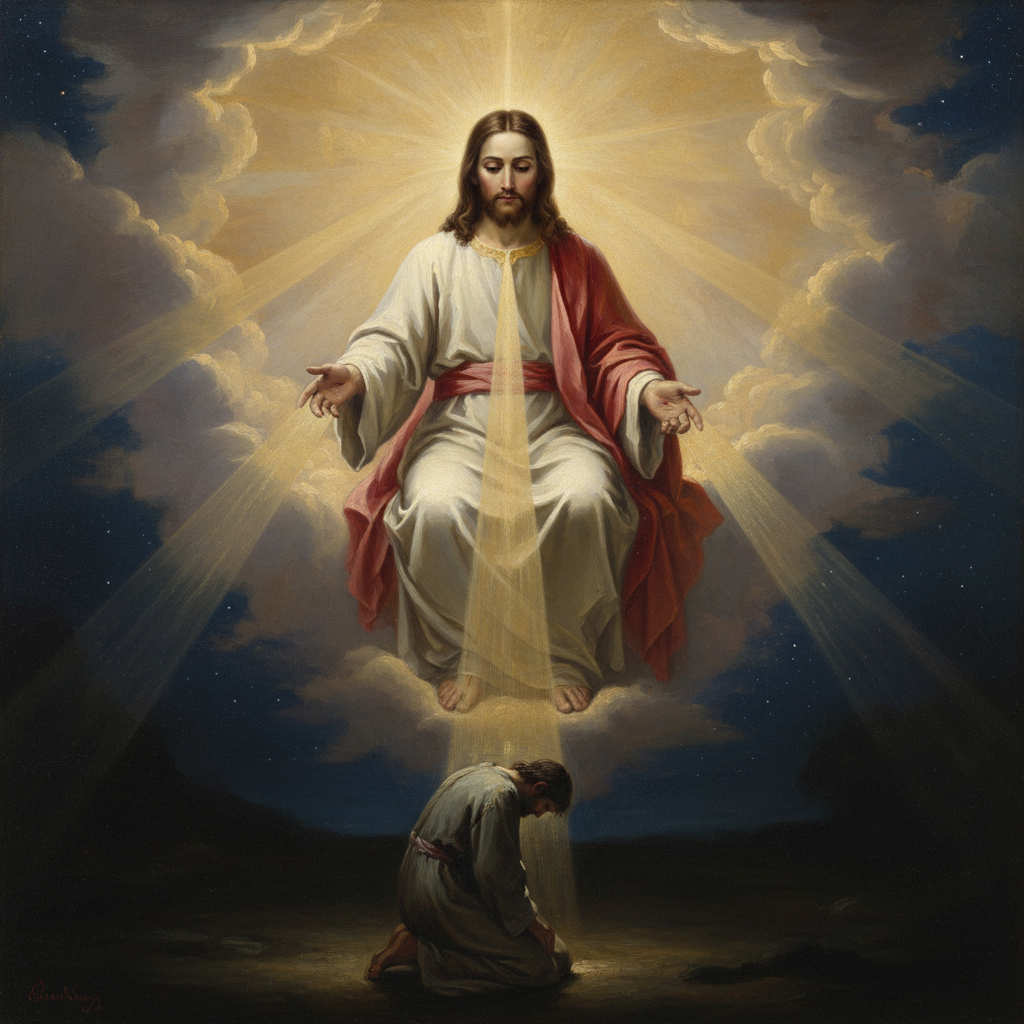
Friend, before we say anything else, let me say this: whatever brought you to read these words today—curiosity, weariness, hunger, guilt, grief—you have come to the right subject. Not because I have anything to offer you, but because Jesus Christ does.
“And he is the head of the body, the church; he is the beginning and the firstborn from among the dead, so that in everything he might have the supremacy.” — Colossians 1:18
An Invitation to Look Up
We live in a world that flattens everything. Every person a brand, every truth a preference, every hero eventually exposed. And so when Scripture speaks of Someone who is preeminent—first, supreme, unrivaled, occupying a category entirely His own—our modern ears struggle to hear it. We assume it must be exaggeration. Religious enthusiasm. The devotion of followers who loved their teacher too much.
But the New Testament makes no room for that reading. The claims made about Jesus of Nazareth are either blasphemous madness or they are the deepest truth in the universe. There is no middle shelf on which to set them.
Let us look at Him together.
I. Who He Is: The Eternal Son
Christianity does not begin with a good man who became divine. It begins with God who became man.
John opens his Gospel not in a stable but in eternity:
“In the beginning was the Word, and the Word was with God, and the Word was God. He was with God in the beginning. Through him all things were made; without him nothing was made that has been made.” (John 1:1–3)
Notice the careful language. The Word was with God—distinct in person. The Word was God—one in essence. Before there was a “when,” He was. Before there was matter to measure or space to fill, the Son dwelt in unbroken love with the Father and the Spirit.
Then comes the sentence that split history:
“The Word became flesh and made his dwelling among us.” (John 1:14)
The Greek word John uses—eskēnōsen—means “pitched His tent.” The God whose glory once filled a tabernacle in the wilderness now tabernacled in a body. Hands that flung stars into the void were wrapped in swaddling cloths. The Author entered His own story.
Hebrews puts it with breathtaking density:
“The Son is the radiance of God’s glory and the exact representation of his being, sustaining all things by his powerful word.” (Hebrews 1:3)
He is not like God. He is not a lesser reflection, a created intermediary, a spiritual VIP. He is the charaktēr—the exact imprint, as a seal in wax—of the divine nature. Paul says it plainly: “For in Christ all the fullness of the Deity lives in bodily form” (Colossians 2:9).
Athanasius, the fourth-century bishop who stood almost alone against those who would demote Christ to a creature, wrote:
“He became what we are that He might make us what He is.”
And Charles Spurgeon, that great preacher of grace, said:
“The Lord Jesus Christ is God’s everything for man’s total need.”
II. All Things Through Him and For Him
Here is where the doctrine of Christ’s preeminence becomes cosmic. Paul writes to a church in Colossae that was flirting with the idea that Jesus was one spiritual power among many, one rung on a ladder of enlightenment. Paul’s answer is a hymn:
“The Son is the image of the invisible God, the firstborn over all creation. For in him all things were created: things in heaven and on earth, visible and invisible, whether thrones or powers or rulers or authorities; all things have been created through him and for him. He is before all things, and in him all things hold together.” (Colossians 1:15–17)
Read that again slowly. Through Him. He is the agent of creation. Every galaxy, every gene, every grain of sand came into being through the Son.
For Him. He is the goal of creation. The universe is not a neutral stage on which we perform. It was made for Christ—for His glory, His pleasure, His inheritance.
In Him all things hold together. The Greek sunestēken suggests cohesion, continuance. He is not a watchmaker who wound the world and walked away. At this very moment, the atoms in your body are held in relationship by the sustaining word of the Son of God.
This means there is no neutral ground in the universe. Abraham Kuyper said it memorably:
“There is not a square inch in the whole domain of our human existence over which Christ, who is Sovereign over all, does not declare, ‘Mine!'”
And C.S. Lewis, with his usual clarity:
“I believe in Christianity as I believe that the sun has risen: not only because I see it, but because by it I see everything else.”
If Christ is the light by which everything else is seen, then to live without reference to Him is not merely to miss one subject among many. It is to misread everything.
III. Why He Came: The Weight of Our Real Problem
Now we must be honest about something uncomfortable, because the glory of Christ’s work cannot be seen without it.
The Bible’s diagnosis of the human condition is not that we are unfulfilled. It is that we are guilty.
“For all have sinned and fall short of the glory of God.” (Romans 3:23)
“There is no one righteous, not even one.” (Romans 3:10)
“All of us also lived among them at one time, gratifying the cravings of our flesh and following its desires and thoughts. Like the rest, we were by nature deserving of wrath.” (Ephesians 2:3)
We instinctively resist this. We compare ourselves to worse people and feel reasonably safe. But the standard is not the neighbor; it is the character of God Himself—“Be holy, because I am holy” (1 Peter 1:16). And measured there, the verdict is unanimous.
Here is the dilemma at the heart of the universe: God is just. He will not sweep evil under the rug of the cosmos. “He does not leave the guilty unpunished” (Exodus 34:7). A judge who acquits the guilty is not merciful; he is corrupt. The very goodness of God that makes Him worth worshiping is what makes our sin a genuine crisis.
And yet God is love. “I take no pleasure in the death of anyone,” He declares. “Repent and live!” (Ezekiel 18:32).
How can God be both perfectly just and freely forgiving? How can the Judge acquit the guilty without ceasing to be good?
This is the question the cross answers.
IV. Why He Alone Is Qualified
The reconciliation of sinners to a holy God required a Mediator—and not just any mediator. Consider what the job description demanded:
He had to be truly human. The debt was human; the payment must be human. “Since the children have flesh and blood, he too shared in their humanity” (Hebrews 2:14). A merely divine savior could sympathize with us but could not stand in for us. So the Son took on a real body, real nerves, real tears. “For we do not have a high priest who is unable to empathize with our weaknesses, but we have one who has been tempted in every way, just as we are—yet he did not sin” (Hebrews 4:15).
He had to be sinless. A debtor cannot pay another’s debt. Every priest in Israel had to offer sacrifice for himself first (Hebrews 5:3). But Christ “had no sin” (2 Corinthians 5:21); He was “a lamb without blemish or defect” (1 Peter 1:19). At His trial, Pilate could only say, “I find no basis for a charge against this man” (Luke 23:4).
He had to be truly God. The offense was against infinite worth; the satisfaction must be of infinite worth. Only God could bear the weight of divine wrath and come out the other side alive. “God was pleased to have all his fullness dwell in him, and through him to reconcile to himself all things” (Colossians 1:19–20).
He had to come willingly. A sacrifice dragged to the altar is a victim. Jesus said: “No one takes it from me, but I lay it down of my own accord” (John 10:18).
Now read the exclusivity of Scripture’s claim not as arrogance but as the simple arithmetic of a unique qualification:
“For there is one God and one mediator between God and mankind, the man Christ Jesus, who gave himself as a ransom for all people.” (1 Timothy 2:5–6)
“Salvation is found in no one else, for there is no other name under heaven given to mankind by which we must be saved.” (Acts 4:12)
“I am the way and the truth and the life. No one comes to the Father except through me.” (John 14:6)
There is no rival because there is no one else who fits. Not Moses—he needed a mediator himself. Not an angel—no angel bled. Not our sincerity, our religion, our resolutions, our best efforts. Only the God-Man.
And what did He do?
“God made him who had no sin to be sin for us, so that in him we might become the righteousness of God.” (2 Corinthians 5:21)
This is the great exchange. Our sin credited to Him. His righteousness credited to us. Justice fully satisfied, mercy fully extended—at the same address, on the same afternoon, on a hill outside Jerusalem.
John Stott wrote of it:
“The essence of sin is man substituting himself for God, while the essence of salvation is God substituting himself for man.”
And Charles Wesley put it to song:
“Amazing love! how can it be That Thou, my God, shouldst die for me?”
Then, on the third day, the tomb was found empty—because “it was impossible for death to keep its hold on him” (Acts 2:24). The resurrection is God’s public receipt, His declaration that the payment cleared. “He was delivered over to death for our sins and was raised to life for our justification” (Romans 4:25).
V. What He Is Like: The Character of the King
Some fear that a Christ this exalted must be cold. Distant. Terrifying in His holiness.
Look at Him.
He is the One who touched lepers when a word would have done (Mark 1:41). He let a woman with a shameful reputation weep on His feet while religious men muttered (Luke 7:36–50). He called children to Himself when His own disciples shooed them away (Mark 10:14). He wept at a grave He was about to empty (John 11:35). He fed crowds who followed Him for the bread. He rebuked storms and never once rebuked a broken person who came to Him for help.
He said of Himself:
“Come to me, all you who are weary and burdened, and I will give you rest. Take my yoke upon you and learn from me, for I am gentle and humble in heart, and you will find rest for your souls.” (Matthew 11:28–30)
Of all the things He might have highlighted about His own heart—power, wisdom, majesty—He chose gentle and humble.
“A bruised reed he will not break, and a smoldering wick he will not snuff out.” (Isaiah 42:3)
Thomas Goodwin, the Puritan, wrote that Christ’s heart in heaven toward His people “is as graciously inclined to sinners now as ever it was on earth.” And Richard Sibbes offered this pastoral gem:
“There is more mercy in Christ than sin in us.”
He was, in Philip Bliss’s phrase, “the sinner’s Friend”—and He bore the sneer of it: “This man welcomes sinners and eats with them” (Luke 15:2). What His enemies meant as an accusation stands today as the gospel in a sentence.
VI. His Invitation
So here is where all of this lands—not in a theology lecture but on your doorstep.
The One through whom all things were made, who upholds the universe by His word, who is coming again to judge the living and the dead, extends His hands and says:
“Come.”
“Whoever comes to me I will never drive away.” (John 6:37)
“Come, all you who are thirsty, come to the waters; and you who have no money, come, buy and eat! Come, buy wine and milk without money and without cost.” (Isaiah 55:1)
“Whoever believes in the Son has eternal life.” (John 3:36)
“Here I am! I stand at the door and knock. If anyone hears my voice and opens the door, I will come in and eat with that person, and they with me.” (Revelation 3:20)
Notice what the invitation does not require. It does not require you to clean yourself up first—that is what He came to do. It does not require you to understand everything—only to trust Him. It does not require a fee—“the gift of God is eternal life in Christ Jesus our Lord” (Romans 6:23).
What it requires is that you come as you actually are: empty-handed, needy, willing to abandon the fiction of your own righteousness and receive His.
“If you declare with your mouth, ‘Jesus is Lord,’ and believe in your heart that God raised him from the dead, you will be saved.” (Romans 10:9)
And what do you receive? Not merely a clean record, though that is glorious. You receive Him. Eternal life is defined by Jesus this way: “Now this is eternal life: that they know you, the only true God, and Jesus Christ, whom you have sent” (John 17:3). Life through Him and life with Him—adoption into a family (Romans 8:15), the indwelling Spirit (Ephesians 1:13–14), a promise that “nothing will be able to separate us from the love of God that is in Christ Jesus our Lord” (Romans 8:39), and a future in which “we shall be like him, for we shall see him as he is” (1 John 3:2).
A Closing Word
Every knee will bow to Jesus Christ. That is not a threat; it is the settled outcome of history:
“Therefore God exalted him to the highest place and gave him the name that is above every name, that at the name of Jesus every knee should bow, in heaven and on earth and under the earth, and every tongue acknowledge that Jesus Christ is Lord, to the glory of God the Father.” (Philippians 2:9–11)
The only question is whether you will bow now, in glad worship, or later, in sorrow.
He is preeminent whether you acknowledge it or not. But He offers to be your Savior as well as your Sovereign. He offers to be, as the old hymn says, “all in all.”
Blaise Pascal wrote that there is a God-shaped void in every human heart which nothing created can fill. If you have spent years trying to fill it and found every substitute leaking, hear the voice of the One who made you for Himself.
“Come to me.”
Come today. He has never turned away a single soul who did.
“O Lord Jesus Christ, You are preeminent in creation, preeminent in redemption, preeminent in the church, and preeminent in the age to come. Be preeminent in me. Amen.”
Other Resources Available:
- FaithAnswersPress.net: Grow in your faith and share your hope with others. Find biblical answers about the Christian faith. VISIT THE SITE NOW
- Download the FAQs of Faith app for easy access to Faith Answers Press LLC websites, answers to spiritual FAQs, and a daily faith-boosting podcast. DOWNLOAD NOW