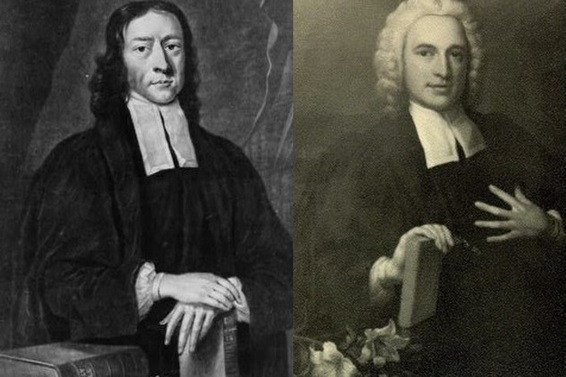
John and Charles Wesley are two of the most influential figures in the history of Christianity. Born in the 18th century in England, the two brothers were instrumental in the founding of the Methodist movement, which would go on to become one of the largest Protestant denominations in the world.
The early lives of the Wesley brothers
John Wesley was born in 1703 in Epworth, Lincolnshire, England, to a devout Anglican family. His father, Samuel Wesley, was a minister, and his mother, Susanna Wesley, was a deeply spiritual woman who played a major role in her children’s religious education. Charles, born in 1707, was the eighteenth of nineteen children.
As young men, John and Charles both attended Oxford University, where they joined a group of students who were committed to living a devout Christian life. This group, which would come to be known as the “Holy Club,” was heavily influenced by the teachings of the German theologian, Philipp Spener, and his emphasis on personal piety and Christian living.
After graduation, John and Charles both became ordained ministers in the Anglican Church. However, it was their conversions in 1738 that would change the course of their life and ministry.
The missionary trip to Georgia
John Wesley became a missionary of the Society for the Propagation of the Gospel in Foreign Parts and, along with Charles, sailed for Georgia in 1735. They were part of a company of 80 English passengers. There were also 26 of a group of missionaries called Moravians, who had come from Germany. Charles and John traveled to Georgia with James Oglethorpe, founder of the colony of Georgia, on his second voyage to the colony.
The storms that tested John Wesley’s faith
John realized that he was not truly at peace with God. While sailing to Georgia, there were three violent storms that tested John’s faith. After the first two, he wrote that he felt he had no faith, because he was unwilling to die. This was not so with the Moravians. John wrote in his journal:
[The sea] split the mainsail in pieces, covered the ship, and poured in between the decks, as if the great deep had already swallowed us up. A terrible screaming began among the English. The Germans looked up, and without intermission calmly sang on. I asked one of them afterwards, ‘[Weren’t you] afraid?’ He answered, ‘I thank God, no.’ I asked, ‘But were not your women and children afraid?’ He replied mildly, ‘No; our women and children are not afraid to die.’
John Wesley
Just as Wesley’s zealous striving in his Oxford years had failed to produce in him an assurance of God’s acceptance, even amid all of his religious discipline, John was again finding that he was not truly at peace with God.
A Moravian bishop questions Wesley’s assurance.
Soon after the ship reached the Savannah River, John met a man by the name of August Spangenberg, who had previously led the first group of Moravians to Georgia. John considered him to be a very faithful and earnest Christian, and so he asked for his council concerning his spiritual walk. Spangenberg asked him several questions.
First, he asked “Does the Spirit of God bear witness with your spirit that you are a child of God?”
Wesley wrote, “I was surprised, and knew not what to answer.”
Spangenberg pressed on. “Do you know Jesus Christ?”
After pausing, Wesley said, “I know He is the Saviour of the world.”
“True,” Spangenberg replied, “but do you know He has saved you?”
“I hope He has died to save me,” Wesley responded.
“Do you know yourself?” Spangenberg pushed.
Wesley said, “I do,” but commented later that he feared these were “vain words.”
Disappointing results in Georgia
In Georgia, John served as the rector of Christ Church in Savannah. Wesley’s ministry in America was intended not only for English settlers but also for friendly native tribes in Georgia—with the hope, he once said, “of saving my own soul.”
Difficulties arising from Wesley’s strict discipline with his congregation, as well as an unsuccessful love affair, led to his return to England in 1738. Eventually, he lost his good standing with the people of Savannah, which precipitated his return to England.
The conversions of Charles and John Wesley
Charles, the First!
Charles was the first to experience the new birth. This was the main topic about which Whitefield was now preaching. He heard Whitefield in London and records at the time, ‘Mr Whitefield [preaches] not with persuasive words of man’s wisdom, but with the demonstration of the Spirit and with power.1Charles Wesley Journals, Vol 1. P.79 Baker
The brothers had been impressed with the faith of the Moravians on board the ship to America, during the storm. Following these encounters they began seeking them out once they had returned to England.The Moravian Peter Bohler was leading a regular meeting in London’s Fetter Lane. The biographer Dallimore writes, ‘Charles and John were in almost daily contact with Bohler.’ He asked Charles ‘Do you hope to be saved? He replied, ‘I do!’ ‘For what reason do you hope it?’ ‘Because I have used my best endeavours to serve God.’
“I felt my heart strangely warmed. I felt I did trust in Christ, Christ alone for salvation, and an assurance was given me that He had taken away my sins, even mine, and saved me from the law of sin and death.”
Charles Wesley
John’s conversion soon followed
Three days later, at one of the Moravian meetings in Aldersgate Street, John Wesley got his breakthrough. He had already discussed Justification by faith with Peter Bohler, but this was different.
John experienced a profound spiritual awakening. He later wrote in his journal:
“In the evening I went very unwillingly to a society in Aldersgate Street, where one was reading Luther’s preface to the Epistle to the Romans. About a quarter before nine, while he was describing the change which God works in the heart through faith in Christ, I felt my heart strangely warmed.
I felt I did trust in Christ, Christ alone for salvation; and an assurance was given to me that he had taken away my sins, even mine, and saved me from the law of sin and death.”
John Wesley
This experience marked a turning point in John’s life and ministry, and he began to preach a message of personal conversion and salvation by faith in Christ alone.
A ministry committed to personal piety
The Wesleys’ faith and beliefs were guided by a deep commitment to personal piety and Christian living. They believed that Christians should strive to live holy lives, to be filled with the love of God, and to serve others in the name of Christ. They also placed a strong emphasis on the importance of the Bible as the primary source of Christian teaching and guidance.
The Wesleys’ ministry launched the Methodist movement, which sought to revive the Church of England and to bring the gospel message to those who had been marginalized and excluded by society. They preached to crowds of people in open fields and on street corners, and their message of personal conversion and salvation by faith in Christ resonated with many.
The dispute between John and his friend George Whitefield
Born in Gloucester, George Whitefield enrolled at Pembroke College at the University of Oxford in 1732. While there, he joined the “Holy Club” and was introduced to the Wesley brothers, John and Charles, with whom he would work closely in his later ministry.
A rift between Whitefield and the Wesleys in 1741 led to Whitefield calling a conference of Calvinistic Methodists on January 5, 1743. An association was formed and a tabernacle built in the Moorfields area of London. The Calvinist teaching of predestination grace and divine initiative broke from the Wesleys’ emphasis on free grace and free will. While both parties believed in such doctrines as original sin, justification by faith, the substitution atonement, and sanctification, they differed in their understanding of the human role in the process of salvation. In a letter Whitefield wrote to Wesley, he said:
Dear, dear Sir, O be not offended! For Christ’s sake be not rash! Give yourself to reading. Study the covenant of grace. Down with your carnal reasoning. Be a little child; and then, instead of pawning your salvation, as you have done in a late hymn book, if the doctrine of universal redemption be not true; instead of talking of sinless perfection, as you have done in the preface to that hymn book, and making man’s salvation to depend on his own free-will, as you have in this sermon; you will compose an hymn in praise of sovereign distinguishing love. You will caution believers against striving to work a perfection out of their own hearts, and print another sermon the reverse of this, and entitle it free grace indeed. Free, not because free to all; but free, because God may withhold or give it to whom and when He pleases.
George Whitefield’s letter to Wesley
The Growth of the Methodist Societies
John Wesley remained an Anglican for the remainder of his life. He was an administrative genius. He traveled extensively. In his diary, he claimed to travel a minimum of 4,500 miles per year. Methodist “societies” were appearing all over England, Ireland, and Wales. Most of the believers were members of the Anglican Church, Wesley urged them to attend their parish churches for worship and communion. However, his coverts were finding their spiritual center in the Methodist societies, where they would confess their sins to one another, submit to the discipline of their leader, and join in prayer and song.
Charles Wesley wrote over 7,000 hymns and gospel songs for the Methodist meetings. His best loved song, “Jesus Lover of my Soul” was sung in societies all over Britain and America.
By 1748, the Methodists were a church within a church. For the next forty years, Wesley resisted the pressures from his followers and the Anglican Church to separate from the Church of England. He said, “I live and die a member of the Church of England.”
John Wesley continued preaching almost to the end of his days. He died March 2, 1791, at nearly age eighty-eight. He left behind 79,000 followers in England and 40,000 in North America. If judged by the greatness of his influence, he would be considered among the greats of his times.
Legacy of the Wesleys
The generous life of John Wesley
John Wesley left a legacy of living selflessly by investing his wealth in the lives of others instead of spending his wealth on himself. He understood that it wasn’t his money but it all belonged to the Lord of heaven and earth. One would say that one of his “greatest achievements” was being known for having lived a generous life.
John Wesley’s primary focus was upon the doctrine of salvation and the relationship between grace, faith, and holiness of heart and life. Wesley identified three doctrines that sums up the core of Methodist and Wesleyan-Holiness teaching. First, Wesley taught the classical doctrine of original sin and the absolute inability of human beings to save themselves through virtuous works. Secondly, Wesley taught that salvation, or justification as it is termed, comes by faith alone. And thirdly, Wesley taught that genuine faith produces inward and outward holiness.
Charles gift of expressing prayer and praise through hymnwriting
Charles Wesley is well known as the sweet singer of Methodism the most gifted and most prolific of all English hymnwriters. His hymns are an exhilarating expression of the evangelical faith and mood of the revival of the eighteenth century. His gift of expressing prayer and praise in great simplicity, and faithfully recording the ups and downs of the Christian life, has enriched and encouraged the whole church.
It is, however, a popular misconception that Charles was the hymnwriter and his brother John the preacher. Biographer Arnold Dallimore firmly established Charles as much more than just a poet and puts him in his rightful place in Methodisms history, as one of the most powerful of the open-air field preachers of the revival and a tireless evangelist who spoke in demonstration of the Spirit and of power.
Founders of the the Methodist movement
The Wesleys’ legacy is still felt today in the millions of people around the world who identify as Methodists. Their emphasis on personal piety, Christian living, and evangelism has had a profound impact on the Christian Church, and their commitment to social justice and the care of the poor continues to inspire people of faith today.
Reflections on the lives of the Wesley brothers
Assurance of salvation is the foundation for godly living
If someone is uncertain about their salvation, they will be inclined to do more “good works” to feel worthy of God’s grace. But no matter how many works they do, there’s no assurance they will be enough. Only by believing God’s promise of grace through faith in Christ, will works be done out of love and gratitude for what Christ has already done for us.
Through fear of the storms that John Wesley experienced as he sailed to Georgia, he realized that he was missing a calm spirit that the Moravian Christians were experiencing at the same time. His fear of death revealed his lack of faith and motivated him to speak to a Moravian bishop, who helped to uncover the doubts he had about himself. Once he returned to England, he was drawn to the Moravian Church, where he was converted to Christ by hearing Luther’s preface to Romans. Thereafter, the sermons about Christian living that he preached became less about one’s duty and more about our love for Christ.
Human reasoning easily leads to a diminishment of the covenant of grace
People have a natural way of relying on themselves to meet their own needs. However, God demands that we look only to Him and trust what His Son has done for them to receive forgiveness of sins and inherit eternal life. We must lose all hope in ourselves and place all of our hope in Christ. This is both unnatural for us and strikes a blow at our self-pride.
But once we understand that we’re really spiritually dead in our sins (Ephesians 2:1), not just sick or dying, we’re more likely to abandon our false belief that we can do anything to gain God’s acceptance. But If we continue to believe that we have anything worthwhile to offer God, we simply miss His grace and any real hope of salvation.
The Wesleys were orthodox in their message concerning Christ and His work on behalf of sinners. However, they strayed from the biblical doctrine of God’s sovereignty and predestination. We don’t render evangelism useless by honestly speaking of limited atonement and the doctrines of grace. The Gospel is offered to everyone. We don’t know who Christ died for, but we can say, “You’re invited to come Christ. You’re commanded to come to Christ. There’s no excuse for not coming to Christ, and if you come to Christ, you will most certainly be saved.”
In short, the offer of salvation is universal—to all who will believe (Romans 10:11, 13). We also know that, regardless of how broad Christ’s atonement is, it is limited in some respect. It is effective only for those who believe (John 3:18). For they are God’s elect, having been born again (John 3:3,6, 6:37,39,44, Ephesians 1:4-6).
We are saved by faith alone in Christ alone, not by works
God’s law and His grace are not opposed to each other, but rather complementary. The law reveals the will of God and shows us our sin, while grace provides the means of salvation. Law and grace work together to accomplish the purposes of God. The law was not given as a means of salvation. But rather as a means of showing people their need for a savior (see Galatians 3:24).
The sacrifices and ceremonies of the Old Covenant pointed to Christ. They were a shadow of the things to come (Hebrews 10:1). They were a temporary means of atonement until the coming of Christ, who would offer himself as our perfect sacrifice.
In the New Covenant, grace is administered through the gospel. The gospel is the good news that God has provided salvation through Christ, not by our works of obedience. The gospel is not a new law but rather the means of salvation. Through faith in Christ, we are justified and receive the forgiveness of sins.
The law, however, still has a vital role in the life of the believer. It reveals the will of God. Therefore, the believer should obey the law out of love for God and gratitude for his salvation. The law is not a means of salvation but rather a guide for Christian living.
To learn more, visit my blog, How to Begin Your Life Over Again. And click here, to view an excellent video presentation of the Gospel.
Sources, references, and related posts
Sources
Bruce L. Shelley. Church History in Plain Language. Thomas Nelson Publishers, Nashville, 2nd Edition. 1982. Chapter 34 – A Brand from the Burning: Wesley and Methodism.
A. Kenneth Curtis, J. Stephen Lang, Randy Petersen. The 100 Most Important Events in Christian History. Flenning H. Revell (Baker Book House), Grand Rapids, MI. 1991, Seventh Printing 2000. pp. 136-138.
Arnold Dallimore, A Heart Set Free: The Life of Charles Wesley. Evangelical Press, 1988.
References
- 1Charles Wesley Journals, Vol 1. P.79 Baker ↩︎