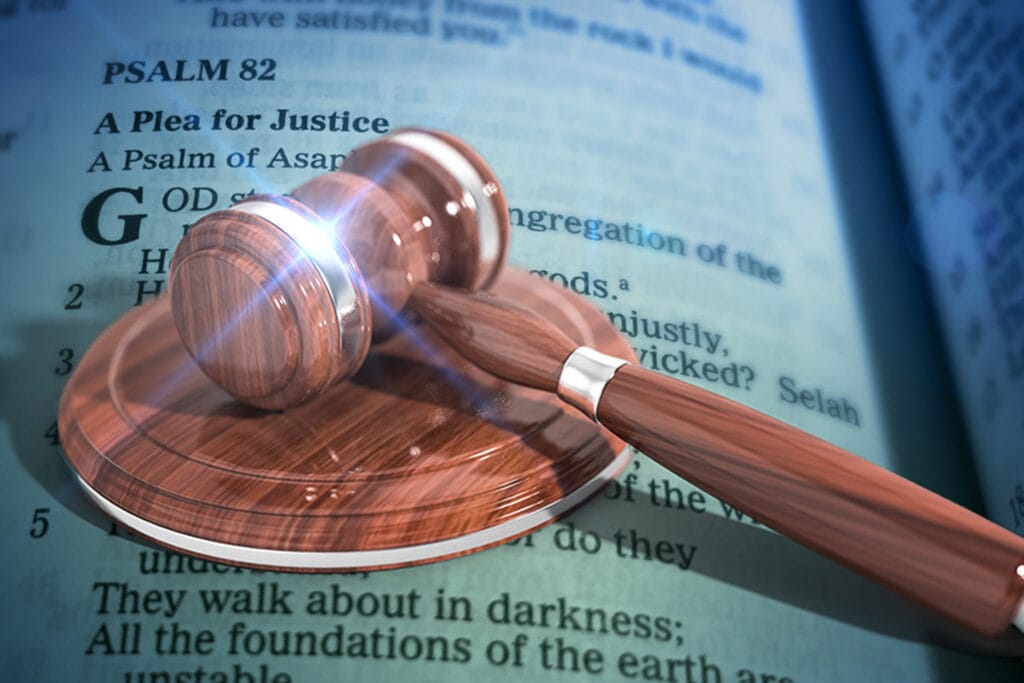
Judgment is Real, Personal, Unavoidable, and Righteous
If God is holy, and if sin is real, then judgment is not an embarrassing doctrine to avoid. It is the necessary conclusion. A world filled with evil, cruelty, lies, oppression, abuse, pride, lust, greed, and rebellion cannot be morally meaningful unless there is a Judge who sees truly and judges rightly.
Many people want a God of love, but not a God of wrath. They want mercy, but not justice. They want comfort, but not accountability. Yet that is not because wrath and justice are defects in God. It is because we tend to imagine ourselves in the dock only rarely, and other people there constantly.
Scripture will not let us do that. The Bible insists that judgment is real, personal, unavoidable, and righteous. “It is appointed for man to die once, and after that comes judgment” (Hebrews 9:27). That is not merely a doctrine for tyrants, murderers, and visibly wicked people. It is for you. It is for me. We will stand before God.
This is solemn truth. But it is necessary truth. If you are going to follow the true path to hope, you must not look away from the God who judges.
“What comes into our minds when we think about God is the most important thing about us.” — A. W. Tozer
Why Judgment Is Necessary
Human beings cry out for justice all the time. We want justice when children are abused, when the innocent are exploited, when the weak are crushed, when lies destroy reputations, when rulers act wickedly, and when evil seems to prosper. We know instinctively that evil should not simply be ignored.
That instinct is not irrational. It reflects the moral reality God has built into the world. He is not indifferent to evil. “The Rock, his work is perfect, for all his ways are justice. A God of faithfulness and without iniquity, just and upright is he” (Deuteronomy 32:4).
If God never judged, then He would not be good. A judge who shrugs at murder, bribery, rape, and betrayal is not loving; he is corrupt. In the same way, a god who never opposes evil would not be morally glorious. He would be morally vacant.
Paul says that God “will render to each one according to his works” (Romans 2:6). Revelation shows the dead standing before God, and “the dead were judged by what was written in the books, according to what they had done” (Revelation 20:12). Scripture does not present history as an endless cycle of injustice. It is moving toward a day when every hidden thing will be exposed, every lie answered, every wrong weighed, and every person summoned.
Without divine judgment, evil wins. With divine judgment, evil does not have the last word.
God’s Wrath Is Holy, Not Sinful
Many stumble over the language of God’s wrath because they import into God the worst forms of human anger. Human anger is often petty, selfish, explosive, spiteful, or disproportionate. God’s wrath is none of those things.
The Bible says, “For the wrath of God is revealed from heaven against all ungodliness and unrighteousness of men” (Romans 1:18). Notice what that means. God’s wrath is not a random mood. It is His holy, settled, personal opposition to evil. It is the right response of a perfectly pure God to all that contradicts His character.
God does not lose control. He does not fly into temper. He is not vindictive. His wrath is the expression of His holiness in the presence of sin. Because He is good, He must oppose evil. Because He is light, He must oppose darkness. Because He is true, He must oppose lies. Because He is righteous, He must oppose wickedness.
To deny God’s wrath is not to make Him more loving. It is to make Him less holy, less just, and finally less good.
That is one reason sentimentality is so dangerous. Sentimentality talks about love in ways that empty it of moral substance. It says, in effect, “If God is loving, He will simply overlook sin.” But the Bible never speaks that way. God’s love is not indulgent softness. His love is holy love. His mercy is real mercy precisely because His judgment is real judgment.
Judgment According to Truth
One of the most searching statements in Scripture is Romans 2:2: “We know that the judgment of God rightly falls on those who practice such things.” God’s judgment is according to truth. He does not misread motives. He does not lack evidence. He does not confuse appearances with reality.
People deceive other people all the time. We curate images, manage impressions, excuse ourselves, compare ourselves with worse sinners, and hide behind outward respectability. But none of that works before God.
Psalm 139 reminds us that God knows our sitting down and our rising up; He discerns our thoughts from afar; even before a word is on our tongue, He knows it altogether (Psalm 139:1–4). Jesus said that on the day of judgment people “will give account for every careless word they speak” (Matthew 12:36). Ecclesiastes closes with the warning that “God will bring every deed into judgment, with every secret thing, whether good or evil” (Ecclesiastes 12:14).
This destroys the false refuge of image-management. You may fool a church, a family, a public audience, or even yourself for a while. You will not fool God.
Judgment According to Works
Romans 2:6 says God “will render to each one according to his works.” Revelation 20 says the dead are judged according to what they had done. That raises an important question: if the Bible later teaches that sinners are not justified by works, what does it mean that judgment is according to works?
It means, at minimum, that our works reveal us. They do not function as a ladder by which we climb into God’s favor. They function as evidence of what we really are. Our words, actions, habits, loves, refusals, and secret loyalties testify about the heart.
This is devastating for self-righteousness. Many people assume they will fare well before God because they are “decent,” “sincere,” or “better than most.” But God does not grade on a curve. He judges with perfect righteousness. His standard is not the behavior of other sinners; His standard is His own holiness.
That is why Romans 3:20 says, “By works of the law no human being will be justified in his sight.” The doctrine of judgment according to works does not teach salvation by moral effort. It teaches that God’s judgment is fair, public, and exact. It also exposes us, because our works cannot save us. They condemn us.
The Personal Nature of Judgment
One of the most common ways people avoid this doctrine is by keeping it abstract. They say, “Yes, surely Hitler will be judged,” or “Of course the truly monstrous will answer to God.” That is easy to say because it leaves the speaker safely outside the frame.
But the Bible does not leave you outside the frame.
Paul writes, “For we must all appear before the judgment seat of Christ” (2 Corinthians 5:10). Jesus warns, “I tell you, on the day of judgment people will give account” (Matthew 12:36). Hebrews 9:27 says judgment comes after death. Revelation 20 portrays individuals standing before God. The issue is not merely that evil people in general will be judged. The issue is that you will stand before your Maker.
This is where deflection becomes spiritually deadly. People say, “I don’t like a God like that.” But your dislike does not alter reality. A patient may dislike a diagnosis. That does not make the diagnosis false. A criminal may dislike a verdict. That does not erase the law. Our preferences do not govern the character of God.
The deeper problem is that deflection keeps the conscience from doing its proper work. Instead of asking, “Is this true?” or “Am I ready to meet God?” the sinner asks, “Do I find this emotionally comfortable?” But truth is not determined by comfort.
Jesus Spoke Clearly About Hell
Many assume that hell is a harsh doctrine invented by later Christians. In fact, Jesus Himself spoke of hell with terrifying clarity.
He warned of “the hell of fire” (Matthew 5:22). He said it is better to lose an eye or a hand than to be thrown into hell (Mark 9:43–48). He spoke of a final separation in which some “will go away into eternal punishment, but the righteous into eternal life” (Matthew 25:46). He told of a rich man in torment after death (Luke 16:19–31). He warned, “Fear him who can destroy both soul and body in hell” (Matthew 10:28).
People sometimes try to soften these warnings by saying hell is only a symbol. But symbols in Scripture do not reduce reality; they intensify it. Fire, darkness, exclusion, destruction, and torment are not chosen to make hell sound milder than it is. They are chosen to impress upon us that final judgment is dreadful beyond our full comprehension.
Second Thessalonians 1:8–9 speaks of those “who do not know God and on those who do not obey the gospel of our Lord Jesus” suffering “the punishment of eternal destruction, away from the presence of the Lord and from the glory of his might.” This does not mean God ceases to be omnipresent. It means the lost are shut out from His favorable presence, His blessing, His joy, and His light. Hell is not a party for rebels. It is the final ruin of all who remain in rebellion.
“There are only two kinds of people in the end: those who say to God, ‘Thy will be done,’ and those to whom God says, in the end, ‘Thy will be done.’” — C. S. Lewis
Common False Paths
1. Sentimentalism
Sentimentalism says love excludes judgment. Scripture says the opposite. Because God is love, evil matters. Because God is good, sin is not trivial. A god who never judges would not heal the world; he would abandon it to evil.
2. Denial
Denial says hell is embarrassing, outdated, or symbolic in a way that removes its force. But Jesus did not treat hell as optional theology. Neither should we. If you make yourself more tender-minded than Christ, you are not becoming more compassionate than He is. You are refusing His words.
3. Deflection
Deflection says, “I don’t like this doctrine,” or “I could never believe in a God who judges.” But reality does not bend to preference. The right question is not whether this doctrine flatters modern sensibilities. The right question is whether it is true.
4. Comparison
Comparison says, “I may not be perfect, but I’m not as bad as some people.” That is a refuge of pride. God’s standard is not the worst sinner you know. His standard is His own holiness. “None is righteous, no, not one” (Romans 3:10).
5. Presumption
Presumption says, “There is still time later,” or “God will surely excuse me in the end.” Scripture says otherwise: “Today, if you hear his voice, do not harden your hearts” (Hebrews 3:15). No one is promised another day.
The Justice of Hell
The doctrine of hell is often attacked as morally excessive. But those objections usually assume that sin is small, that God is not infinitely holy, and that man is basically good. Scripture teaches none of those things.
Sin is not merely failing to be nice. It is rebellion against the God who made us, sustains us, commands us, and deserves our worship. As John Stott wrote:
“The essence of sin is man substituting himself for God, while the essence of salvation is God substituting himself for man.”
Hell is not unjust because God is not unjust. The Judge of all the earth will do right (Genesis 18:25). We are not in a position to improve upon God’s moral judgment. Our problem is not that God’s justice is too severe, but that our view of sin is too small and our view of God is too low.
This does not mean Christians speak of hell coldly or with delight. Quite the opposite. Jesus wept over Jerusalem (Luke 19:41). Paul spoke of enemies of the cross with tears (Philippians 3:18). Truth about judgment should produce sobriety, grief, humility, and urgency—not cruelty.
Why This Matters Now
This doctrine is not given to satisfy curiosity about the afterlife. It is given to awaken the conscience now.
If judgment is real, then your life is not morally weightless. If judgment is real, then your sins are not harmless. If judgment is real, then death is not the end of accountability. If judgment is real, then the question of reconciliation with God is the most urgent question in your life.
Perhaps you have spent years avoiding this. Perhaps you hide behind busyness, morality, church background, intellectual objections, or vague religious feelings. But none of those things will stand in the day of judgment.
The only safe response is honesty. Stop arguing with reality. Stop minimizing sin. Stop imagining that God’s patience means indifference. Romans 2:4 says God’s kindness is meant to lead you to repentance, yet Romans 2:5 warns that stubborn impenitence stores up wrath for the day of wrath when God’s righteous judgment will be revealed.
God’s patience is real. But it is not permission to continue in rebellion.
A Necessary Turning Point
To see that God judges is frightening, and it should be. But it is also clarifying. It strips away illusions. It silences boasting. It exposes false refuges. It teaches us that we cannot survive by excuses, comparisons, or moral self-improvement.
And that is exactly where this series must take us next.
If God is holy, if sin is real, and if judgment is coming, then the obvious question is this: How can guilty people like us be saved? Not, “How can I become a little better?” Not, “How can I balance out my bad deeds?” But, “How can I escape the wrath I deserve and be reconciled to the God I have offended?”
That is the question we must face next.
For now, do not look away from this truth. “Prepare to meet your God” (Amos 4:12). And do not wait casually. The God who judges is real, and every false path that tells you otherwise will only lead you deeper into ruin.
Other Resources Available:
- FaithAnswersPress.net: Grow in your faith and share your hope with others. Find biblical answers about the Christian faith. VISIT THE SITE NOW
- Download the FAQs of Faith app for easy access to Faith Answers Press LLC websites, answers to spiritual FAQs, and a daily faith-boosting podcast. DOWNLOAD NOW