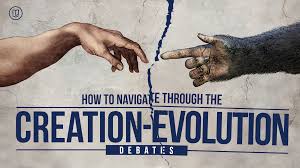
> The relationship between scientific theories like evolution and the biblical account of creation has been a source of debate for many Christians. While some see these perspectives as inherently conflicting, other Christian scholars argue that science and faith can be reconciled, offering a nuanced understanding of God’s creative process.
Interpreting Genesis
Many Christian scholars suggest that the creation account in Genesis should not be read as a scientific textbook but as a theological narrative. Dr. Francis Collins, former director of the National Institutes of Health and a devout Christian, writes in his book “The Language of God”:
“The Bible is not a scientific textbook. It was written to reveal God’s nature and character, not to teach science. When we try to force it into that role, we do both science and faith a disservice.”
This approach allows for a metaphorical interpretation of the six days of creation mentioned in Genesis 1. As 2 Peter 3:8 reminds us, “But do not forget this one thing, dear friends: With the Lord a day is like a thousand years, and a thousand years are like a day.”
Theistic Evolution
Many Christian scholars advocate for a perspective known as theistic evolution, which proposes that God used the process of evolution as His method of creation. This view sees no conflict between accepting scientific evidence for evolution and believing in God as the ultimate Creator.
Dr. Deborah Haarsma, President of BioLogos, an organization promoting harmony between science and biblical faith, explains:
“God could have created instantly, but chose instead to create over billions of years via evolution. This view accepts the scientific evidence and sees evolution as the method God used to create.”
This perspective seems to align with verses like Psalm 104:30, which states, “When you send your Spirit, they are created, and you renew the face of the ground,” suggesting an ongoing process of creation.
The Image of God
One challenge in reconciling evolution with biblical teaching is the concept of humans being created in God’s image (Genesis 1:27). Dr. John Walton, Professor of Old Testament at Wheaton College, offers an interpretation:
“Being in God’s image has more to do with our role as God’s representatives on earth than with our physical or cognitive attributes. This role may seem to be consistent with an evolutionary origin of humanity.”
God’s Sovereignty and Method
Many Christian scholars emphasize that accepting evolution doesn’t diminish God’s role as Creator. As Colossians 1:16-17 states, “For in him all things were created: things in heaven and on earth, visible and invisible… all things have been created through him and for him.”
Dr. Alister McGrath, Professor of Science and Religion at Oxford University, notes:
“The Christian doctrine of creation is not about how things began, but about why they exist and to what end they are destined. It is entirely possible to accept both the scientific theory of evolution and the Christian doctrine of creation.”
Scholarly Challenges to the Evolutionary Theory
While some Christian scholars have attempted to show both evolutionary and creationist theories as complementary, other scholars, such as Phillip E. Johnson, have labored to entirely reject the theory of macroevolution.
Phillip E. Johnson’s book “Darwin on Trial,” published in 1991, presents a critical examination of the theory of evolution and its scientific foundations. As a law professor, Johnson approaches the subject from a legal and logical perspective, challenging what he sees as weaknesses in the evolutionary theory. Here’s a summary of the key points in the book:
- Scientific Critique: Johnson argues that the evidence for Darwinian evolution is not as strong as commonly presented. He questions the sufficiency of fossil records and the explanatory power of natural selection.
- Methodological Naturalism: He critiques the scientific community’s adherence to methodological naturalism, which he argues unfairly excludes the possibility of intelligent design or supernatural intervention.
- Philosophical Implications: Johnson discusses the broader philosophical and cultural implications of Darwinism, suggesting that it has been elevated to a worldview that goes beyond scientific evidence.
- Education Debate: The book addresses the controversy surrounding the teaching of evolution in schools, arguing for a more balanced approach that includes critiques of Darwinism.
- Intelligent Design: While not explicitly advocating for creationism, Johnson’s work laid groundwork for the Intelligent Design movement.
- Scientific Consensus: He challenges the notion of scientific consensus around evolution, arguing that dissenting voices are often marginalized.
- Microevolution vs. Macroevolution: Johnson accepts microevolution (changes within species) but questions the evidence for macroevolution (evolution of new species).
- Cultural Impact: The book explores how Darwinian theory has influenced fields beyond biology, including psychology, ethics, and social sciences.
- Legal Analogy: Using his background in law, Johnson treats the theory of evolution as if it were on trial, examining the evidence and arguments for and against it.
- Call for Open Debate: Johnson concludes by calling for more open and critical examination of evolutionary theory in scientific and educational contexts.
“Darwin on Trial” became a significant work in the critique of evolutionary theory from a non-scientific perspective and sparked considerable debate in both scientific and religious communities. While praised by those skeptical of Darwinian evolution, it has been criticized by many in the scientific community for misrepresenting evolutionary theory and the nature of scientific inquiry.
Conclusion
While the debate continues, some Christian scholars argue that scientific theories like evolution can be reconciled with the biblical account of creation. They suggest that understanding Genesis as a theological rather than scientific text, considering theistic evolution, reinterpreting the concept of God’s image, and recognizing God’s sovereignty in all methods of creation can help bridge the perceived gap between faith and science. But Phillip E. Johnson and other conservative scholars have undertaken the task of highlighting perceived weaknesses in macroevolutionary theory.
For further study on this topic, consider the following resources:
- “The Language of God” by Francis Collins
- “Creation or Evolution: Do We Have to Choose?” by Denis Alexander
- “The Lost World of Genesis One” by John Walton
- “Evolutionary Creation: A Christian Approach to Evolution” by Denis Lamoureux
- “Science and Christianity: Conflict or Coherence?” by Henry F. Schaefer III
- “Darwin on Trial” by Phillip E. Johnson
As you explore this complex topic, remember that seeking understanding is part of our faith journey. Continue to pray for wisdom, study Scripture, and engage in respectful dialogue with fellow believers and scientists.
Other Resources Available:
- FaithAnswersPress.net: Grow in your faith and share your hope with others. Find biblical answers about the Christian faith. VISIT THE SITE NOW
- Download the FAQs of Faith app for easy access to Faith Answers Press LLC websites, answers to spiritual FAQs, and a daily faith-boosting podcast. DOWNLOAD NOW