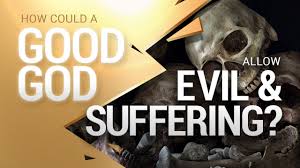
> As Christians, one of the most challenging questions we face is reconciling the existence of suffering and evil with our belief in a loving, all-powerful God. This issue, known as the problem of evil, has been debated by theologians and philosophers for centuries. While there’s no simple answer, Christian scholars have developed thoughtful responses that can help us understand this complex topic.
Free Will and Its Consequences
Many Christian scholars argue that the presence of evil and suffering in the world is a consequence of human free will. God created humans with the ability to choose between good and evil, as evidenced in Genesis 2:16-17: “And the Lord God commanded the man, ‘You are free to eat from any tree in the garden; but you must not eat from the tree of the knowledge of good and evil, for when you eat from it you will certainly die.'”
Dr. William Lane Craig, a prominent Christian philosopher, explains: “The ability to make morally significant choices, including the choice to do evil, is a necessary condition of moral goodness. Without free will, we would be mere robots, incapable of moral choices and thus of moral goodness.”
The Fall and Its Impact
Christian theology teaches that human sin, beginning with Adam and Eve’s disobedience (Genesis 3), brought suffering and death into the world. As the Apostle Paul writes in Romans 5:12, “Therefore, just as sin entered the world through one man, and death through sin, and in this way death came to all people, because all sinned.”
The entry of sin and death into the world through Adam and Eve’s disobedience is seen as having profound implications for humanity, including its free will. Here are some perspectives on how this might affect free will:
- Moral Corruption: Sin is believed to have corrupted human nature. This corruption can influence decision-making and the ability to choose good over evil. Human free will remains, but it is often seen as compromised or inclined, either partly or fully, towards sin.
- Spiritual Separation: The theological view holds that sin created a separation between humans and God. This separation can complicate the exercise of free will, as humans are no longer perfectly aligned with God’s will and may struggle to discern and choose what is good.
- Need for Redemption: The notion of free will is also intricately linked to the need for redemption. While humans are free to make choices, theology often emphasizes the necessity of divine grace to truly restore freedom to align human will with God’s purposes. Thus, without His grace, we are unable to live as we should and do the good that our free will is unwilling to pursue.
- Responsibility and Consequence: Despite the impact of sin, the concept of free will underlines personal responsibility. Humans are considered responsible for their choices and are accountable to God for their actions. This would indicate that God continues to hold humanity responsible for the free will that persists following the fall, though limited by their inherited nature in a significant way.
Therefore, while death through sin affects human nature, inclining it towards moral failing, it does not eliminate free will but complicates its exercise. Christian theology often speaks to the necessity of divine aid for true freedom in choosing good.
Theologians like Augustine and Aquinas have articulated that God’s grace plays a crucial role in overcoming this impaired will, enabling people to make morally upright choices and grow in holiness. Thus, while original sin affects human free will by inclining it towards sin, the possibility of redemption and moral improvement through divine grace remains a central aspect of Christian belief.
Dr. John Lennox, Professor of Mathematics at Oxford University, notes: “The Biblical answer is that sin is the root cause of suffering. And sin is not just a human problem; it affects the whole of creation.”
God’s Greater Purpose
Some scholars suggest that God allows suffering because it can serve a greater purpose. This perspective is reflected in Romans 8:28: “And we know that in all things God works for the good of those who love him, who have been called according to his purpose.”
Strengthened Faith and Character: One classic example is the story of Job from the Bible. Job endured tremendous suffering, losing his wealth, health, and family. Despite his immense trials, Job’s faith ultimately grew stronger, and his character was refined. Through his perseverance and continued trust in God, he not only gained a deeper understanding of and relationship with God but also demonstrated to others the power of faith and resilience in adversity.
Increased Empathy and Compassion: Another example is the Apostle Paul, who faced numerous hardships, including imprisonment, beatings, and persecution. Through his suffering, Paul developed a profound sense of empathy and compassion for others who were struggling. His experiences allowed him to write letters of encouragement and guidance to early Christian communities, helping them navigate their own difficulties and fostering a sense of solidarity and mutual support among believers.
C.S. Lewis, in his book “The Problem of Pain,” writes: “God whispers to us in our pleasures, speaks in our consciences, but shouts in our pains. It is his megaphone to rouse a deaf world.”
The Promise of Redemption
Christian theology emphasizes that God has not abandoned us in our suffering but has entered into it through Jesus Christ. As Hebrews 4:15-16 states: “For we do not have a high priest who is unable to empathize with our weaknesses, but we have one who has been tempted in every way, just as we are—yet he did not sin. Let us then approach God’s throne of grace with confidence, so that we may receive mercy and find grace to help us in our time of need.”
Moreover, Christianity teaches that current sufferings are temporary and will be redeemed. Revelation 21:4 promises: “He will wipe every tear from their eyes. There will be no more death or mourning or crying or pain, for the old order of things has passed away.”
Conclusion
While the question of suffering and evil remains complex, Christian scholars offer these perspectives to help us understand how it can coexist with a loving God. They emphasize the role of free will, the impact of sin, God’s greater purposes, and the promise of ultimate redemption through Christ.
For further study on this topic, consider the following resources:
- “The Problem of Pain” by C.S. Lewis
- “Where is God When it Hurts?” by Philip Yancey
- “Walking with God through Pain and Suffering” by Timothy Keller
- “God, Freedom, and Evil” by Alvin Plantinga
- “The Reason for God: Belief in an Age of Skepticism” by Timothy Keller
Remember, wrestling with these difficult questions is part of the faith journey. As you explore this topic, continue to seek wisdom through prayer, Scripture study, and discussion with other believers.
Other Resources Available:
- FaithAnswersPress.net: Grow in your faith and share your hope with others. Find biblical answers about the Christian faith. VISIT THE SITE NOW
- Download the FAQs of Faith app for easy access to Faith Answers Press LLC websites, answers to spiritual FAQs, and a daily faith-boosting podcast. DOWNLOAD NOW