Dear friends, there are few words in the Christian vocabulary that are as easy to say and as agonizing to practice as forgiveness.
When we have been deeply wounded, betrayed, or abused, our sense of justice screams for retribution. We want the person who hurt us to pay for what they did. Yet, right in the center of the Lord’s Prayer—the very prayer Jesus taught us to pray daily—is a radical and uncomfortable petition: “Forgive us our debts, as we also have forgiven our debtors” (Matthew 6:12, NIV).
If we truly desire spiritual transformation and long to be molded into the image of Christ, we must step into the difficult, holy work of forgiveness. It is the hinge upon which our own healing swings.
Understanding Forgiveness in a Biblical Context
To understand forgiveness, we first have to clarify what it is not. Forgiving someone does not mean minimizing the offense, excusing the abuse, or immediately restoring trust. It does not mean pretending the pain didn’t happen.
Biblical forgiveness is fundamentally the cancellation of a debt. It is a conscious decision to surrender our right to get even, turning the scales of justice over to God. The Apostle Paul lays out the foundational motivation for this in Ephesians 4:32:
“Be kind and compassionate to one another, forgiving each other, just as in Christ God forgave you.” (NIV)
We do not forgive because the other person deserves it; we forgive because we have been the recipients of breathtaking, undeserved grace. C.S. Lewis captured this brilliantly when he wrote:
“To be a Christian means to forgive the inexcusable because God has forgiven the inexcusable in you.”
The Necessity of Forgiving Others and Oneself
When we harbor bitterness, we often believe we are punishing the offender. But unforgiveness is like drinking poison and expecting the other person to die. It slowly corrodes our joy, our peace, and our communion with God.
The theologian Lewis B. Smedes famously said:
“To forgive is to set a prisoner free and discover that the prisoner was you.”
But there is another prisoner we often forget to release: ourselves. Many believers are trapped in a cycle of shame over past sins that God has already forgiven. They feel they must continue to punish themselves to prove they are truly sorry. But to refuse to forgive yourself when God has already declared you clean (1 John 1:9) is to subtly claim that Jesus’ sacrifice on the cross wasn’t quite enough. Accepting God’s grace means allowing His forgiveness to wash over your own past, so you can walk freely into the future.
Stories of Healing Through Forgiveness
The power of forgiveness is perhaps best seen in the life of Corrie ten Boom, a Dutch Christian who survived the Ravensbrück concentration camp after hiding Jews in her home. Years after the war, a man approached her after she spoke at a church in Germany. She instantly recognized him as one of the most cruel guards from the camp—a man who had stood guard while her sister Betsie died.
He told Corrie he had become a Christian and asked for her forgiveness, extending his hand. Corrie stood there, her blood running cold. She wrote later that she simply could not do it. But she silently prayed, “Jesus, I cannot forgive him. Give me your forgiveness.”
As she mechanically thrust her hand into his, she described a literal current of warmth and healing rushing through her arm into his. In that moment, she discovered that forgiveness is not an emotion we manufacture; it is a supernatural act of the Holy Spirit flowing through us. Through that single act of obedience, Corrie experienced profound, permanent healing from the horrors of her past.
Practical Steps for Offering and Receiving Forgiveness
If you are carrying a heavy burden of unforgiveness today, how do you begin to let it go?
- Acknowledge the Pain: Don’t spiritualize your hurt. Name what was taken from you. Tell God exactly how angry and broken you feel.
- Make the Choice: Forgiveness is a decision of the will, not a feeling. Say out loud, “Lord, I choose to forgive [Name] for [Offense]. I release them into your hands.”
- Pray for Your Enemies: Jesus commanded us to “pray for those who persecute you” (Matthew 5:44, NIV). It is nearly impossible to hold onto hatred for someone you are actively lifting up to the throne of grace.
- Repeat as Necessary: Sometimes, you will have to forgive the same person seventy-seven times (Matthew 18:22) because the pain will resurface. When the memory triggers anger, treat it as a prompt to forgive them again.
Going Deeper: Recommended Reading
If you are struggling with a deep wound or simply want to understand the theology of grace better, these resources are absolute lifelines:
- Forgive: Why Should I and How Can I? by Timothy Keller – A masterful, deep dive into the biblical necessity of forgiveness and how it heals a broken society.
- Total Forgiveness by R.T. Kendall – A challenging, life-changing book that walks through the story of Joseph to show what absolute forgiveness looks like.
- Forgive and Forget: Healing the Hurts We Don’t Deserve by Lewis B. Smedes – A classic that breaks down the psychological and spiritual stages of moving past deep offenses.
An Encouraging Thought
Brothers and sisters, God is not asking you to muster up the strength to forgive on your own. He knows your heart is fragile. He knows the offense was agonizing.
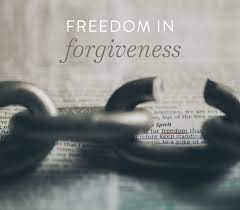
But He is inviting you to open your empty hands and let Him do the heavy lifting. When you choose the path of forgiveness, you are not validating the sin committed against you; you are validating the cross of Jesus Christ. Step into the freedom He purchased for you today. Let the chains fall, and let the profound transformation of your heart begin. You are deeply loved, and completely forgiven.
Other Resources Available:
- FaithAnswersPress.net: Grow in your faith and share your hope with others. Find biblical answers about the Christian faith. VISIT THE SITE NOW
- Download the FAQs of Faith app for easy access to Faith Answers Press LLC websites, answers to spiritual FAQs, and a daily faith-boosting podcast. DOWNLOAD NOW