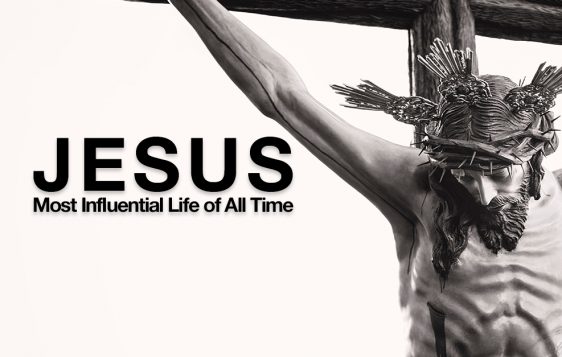
What Jesus Accomplished for Us
If Jesus is truly God the Son in human flesh, then the next question is unavoidable: What did He come to do?
He did not come merely to give advice, set an example, start a movement, or offer vague spiritual inspiration. He came to do what sinners could never do for themselves. He came to save.
This is the heart of the gospel. Paul summarized it with striking simplicity: “Christ died for our sins in accordance with the Scriptures, … he was buried, … he was raised on the third day in accordance with the Scriptures” (1 Corinthians 15:3–4).
That is not the whole of Christian truth, but it is the center of it. If you miss this, you miss Christianity itself. (For a more complete explanation, visit The Heart of the Gospel, which covers Paul’s writings in Romans 1-8.)
We have already seen that God is holy, that sin is real, that judgment is certain, that hell is not imaginary, that we cannot save ourselves, and that Jesus is no mere man. Now the great question is this: How can guilty people be reconciled to a holy God?
The answer is not found in our effort, our morality, our religion, or our sincerity. It is found in the cross and the resurrection of Jesus Christ.
The Cross Was Not an Accident, but the Plan of God
Jesus did not die because events spun out of control. He was not simply a brave reformer crushed by political powers. The cross was not a tragic interruption of His mission. It was His mission.
Acts 2:23 says Jesus was “delivered up according to the definite plan and foreknowledge of God.” Revelation 13:8 speaks of Christ as “the Lamb who was slain” in the purpose of God. Isaiah 53 had already foretold the suffering of the Servant centuries before Jesus was born.
At the human level, wicked men conspired, lied, mocked, and murdered. They were morally responsible for what they did. Yet above and through all of it, God was carrying out His saving purpose.
That matters because the cross is not merely something that happened to Jesus. It is something Jesus came to do.
He said of His life, “No one takes it from me, but I lay it down of my own accord” (John 10:18). He set His face toward Jerusalem (Luke 9:51). He repeatedly told His disciples that He must suffer, be killed, and rise again (Mark 8:31; 9:31; 10:33–34).
The cross was not the collapse of the kingdom. It was the way the King would save His people.
Why the Cross Was Necessary
To many people, the cross seems unnecessary or extreme. Why could God not simply forgive without blood, without judgment, without death?
The answer takes us back to everything already established.
God is holy. Sin is not a small defect. It is rebellion against the God who made us. And God does not stop being just simply because we wish Him to be lenient.
Romans 6:23 says, “The wages of sin is death.” Hebrews 9:22 says, “without the shedding of blood there is no forgiveness of sins.” Romans 3:25–26 explains that God put Christ forward as a propitiation by His blood in order to show His righteousness, “so that he might be just and the justifier of the one who has faith in Jesus.”
That is the issue: How can God forgive sinners without denying His own justice?
The answer is the cross.
At the cross, God does not ignore sin. He judges it. He does not clear the guilty by pretending guilt is unreal. He deals with guilt fully and righteously in the person of His Son.
John Stott wrote:
“The essence of sin is man substituting himself for God, while the essence of salvation is God substituting Himself for man.”
That is exactly the logic of the gospel.
Jesus Died as a Substitute for Sinners
The Bible does not say merely that Christ died. It says why He died.
He died “for our sins” (1 Corinthians 15:3). He was “pierced for our transgressions” and “crushed for our iniquities” (Isaiah 53:5). “The LORD has laid on him the iniquity of us all” (Isaiah 53:6). “He himself bore our sins in his body on the tree” (1 Peter 2:24). “Christ also suffered once for sins, the righteous for the unrighteous, that he might bring us to God” (1 Peter 3:18).
This is substitution. Jesus stood in the place of guilty sinners.
He did not become a sinner in His character. He remained the spotless Lamb of God. But on the cross He took responsibility for the sins of His people and bore the judgment they deserved.
Galatians 3:13 says, “Christ redeemed us from the curse of the law by becoming a curse for us.” Second Corinthians 5:21 says, “For our sake he made him to be sin who knew no sin, so that in him we might become the righteousness of God.”
If that language feels severe, it is because our condition is severe. A shallow view of the cross usually comes from a shallow view of sin, a shallow view of God’s holiness, or both.
J. I. Packer wrote:
“The heart of the gospel is redemption, and the essence of redemption is the substitutionary sacrifice of Christ.”
If Christ is not our substitute, then the cross may move us, but it cannot save us.
What Did Jesus Accomplish at the Cross?
The New Testament uses several rich words to describe what Christ achieved. These are not technical distractions. They show the many-sided glory of His saving work.
1. Propitiation
Romans 3:25 says God put Christ forward as a “propitiation by his blood.” First John 4:10 says, “He loved us and sent his Son to be the propitiation for our sins.”
Propitiation means that Christ bore the wrath of God against sin so that God’s righteous anger is turned away from those who trust in Him.
This is one of the doctrines modern people most dislike. But if God’s wrath is denied, the cross loses its necessity. Jesus did not die merely to show love in the abstract. He died to satisfy divine justice and to endure the judgment our sins deserved.
2. Redemption
Mark 10:45 says that the Son of Man came “to give his life as a ransom for many.” Ephesians 1:7 says, “In him we have redemption through his blood, the forgiveness of our trespasses.”
Redemption speaks of liberation by payment. We were not morally neutral people needing a boost. We were guilty slaves needing rescue. Christ paid the ransom price by His own blood.
3. Reconciliation
Romans 5:10 says, “while we were enemies we were reconciled to God by the death of his Son.” Colossians 1:21–22 says that though we were once alienated and hostile in mind, Christ has now reconciled us “in his body of flesh by his death.”
The cross does not merely improve our feelings about God. It restores peace between holy God and sinful people.
4. Forgiveness
Ephesians 1:7 and Colossians 2:13–14 make clear that through Christ’s death real guilt is cancelled. The record of debt that stood against us has been set aside.
Forgiveness is not God relaxing His standards. It is God, through Christ, dealing with the debt fully.
The Great Exchange
At the center of the gospel is a glorious exchange.
Our sin is counted to Christ. His righteousness is counted to believers.
Second Corinthians 5:21 is perhaps the clearest single verse on this: “For our sake he made him to be sin who knew no sin, so that in him we might become the righteousness of God.” Philippians 3:9 says that the believer is found in Christ, “not having a righteousness of my own” but the righteousness that comes through faith in Him.
This means salvation is not God helping us finish what we started. It is not Christ doing most of the work while we complete the rest. It is not a spiritual partnership in which grace makes up the difference after our best effort.
No. Christ takes what is ours—guilt, condemnation, curse. He gives what is His—righteousness, acceptance, peace.
That is why the gospel is truly good news.
“It Is Finished”: The Finality and Sufficiency of Christ’s Work
As Jesus died, He cried out, “It is finished” (John 19:30).
That does not mean His life was over in a merely tragic sense. It means the work the Father gave Him to do had been accomplished. The debt was paid. The sacrifice was offered. The decisive work of atonement was complete.
Hebrews 10:10–14 stresses this powerfully. Christ offered Himself once for all. Unlike the repeated sacrifices of the old covenant, His sacrifice does not need to be supplemented, repeated, or improved.
“By a single offering he has perfected for all time those who are being sanctified” (Hebrews 10:14).
That means no priest can add to His sacrifice. No ritual can complete it. No suffering of yours can supplement it. No religious system can improve it.
Christ’s work is sufficient.
This is where many people go wrong. They may say they believe Jesus died and rose again, but in practice they still treat His work as inadequate unless they add enough goodness, devotion, penance, sincerity, or spiritual effort. But if human merit must be added, then Christ did not really finish the work.
The gospel says otherwise.
The Resurrection Was Bodily, Historical, and Essential
If the cross is the payment, the resurrection is the public vindication.
Jesus did not merely live on in His followers’ memories. He did not rise only in a symbolic sense. He did not survive as an inspiring spiritual influence. He rose bodily from the grave.
This matters because the New Testament insists on it.
The tomb was empty (Luke 24:1–12). Jesus appeared to His disciples (Luke 24:36–43; John 20:19–29). He invited them to see and touch Him. He ate with them. Paul names witnesses, including more than five hundred brothers at one time, many of whom were still alive when he wrote (1 Corinthians 15:5–8).
Christianity does not ask you to believe in a merely inward resurrection. It presents a public claim about what God did in history.
Paul is uncompromising in 1 Corinthians 15. If Christ has not been raised, then apostolic preaching is empty, faith is futile, believers remain in their sins, and Christians are of all people most to be pitied (1 Corinthians 15:14–19).
In other words, if the resurrection did not happen, Christianity collapses.
But Christ has been raised indeed.
Why the Resurrection Matters
The resurrection is not an appendix to the gospel. It is essential to it.
1. It Vindicates Jesus’ Claims
Romans 1:4 says Christ “was declared to be the Son of God in power … by his resurrection from the dead.” The resurrection does not make Jesus the Son of God; it powerfully declares Him to be who He always was.
The world judged Him a blasphemer and condemned Him. God raised Him and overturned that verdict.
2. It Shows That His Sacrifice Was Accepted
Romans 4:25 says Jesus “was delivered up for our trespasses and raised for our justification.” The resurrection is God’s declaration that the work of atonement has been accepted.
The empty tomb announces that death has no claim on Him, because sin has been dealt with.
3. It Conquers Death
First Corinthians 15:54–57 announces the defeat of death through Jesus Christ. Hebrews 2:14 says that through death He destroyed the one who has the power of death, that is, the devil.
Death is still an enemy, but it is now a defeated enemy for those who belong to Christ.
4. It Guarantees the Resurrection of Believers
Jesus is “the firstfruits of those who have fallen asleep” (1 Corinthians 15:20). His resurrection is not an isolated miracle. It is the beginning of the final harvest. Those united to Him will also be raised.
5. It Means We Have a Living Savior
Christ is not a dead hero to be admired. He is a living Lord who intercedes for His people (Hebrews 7:25), rules over all things (Ephesians 1:20–23), and will come again in glory.
The Cross and Resurrection Must Stay Together
Some want the cross without the resurrection, as if Jesus were only a tragic martyr. Others want the resurrection without the cross, as if hope can come without atonement.
The Bible joins them together.
If Christ died but did not rise, then death won. If Christ rose but did not die for sins, then guilt remains.
But the gospel is that Christ died for our sins and was raised on the third day (1 Corinthians 15:3–4).
The cross answers our guilt. The resurrection answers our death. The cross brings forgiveness. The resurrection brings living hope. The cross secures peace with God. The resurrection guarantees the triumph of Christ and the future of His people.
Common Pitfalls That Can Derail You
1. Reducing the Cross to Moral Influence Only
Of course the cross shows the love of God. Romans 5:8 says so plainly. But it is not only an example of love or sacrifice. If you reduce the cross to inspiration, you remove its saving power.
The cross is not merely Jesus showing us how much love hurts. It is Jesus bearing sin and judgment in the place of sinners.
2. Rejecting the Idea of Wrath and Substitution
Many modern readers are willing to speak of forgiveness but not judgment, love but not wrath, mercy but not propitiation. But once you remove God’s holy justice, the cross becomes unintelligible.
If no wrath is deserved, why did Christ have to die? If no guilt must be dealt with, what exactly was happening at Calvary?
3. Spiritualizing or Denying the Resurrection
Some are happy to say that “Jesus lives on” in a poetic sense, but the apostles preached an empty tomb and a risen body. A merely symbolic resurrection cannot save anyone.
4. Adding Human Merit to Christ’s Finished Work
This error is especially dangerous because it sounds devout. It says, in effect, “Yes, Jesus died and rose again—but now I must make myself acceptable enough for God to receive me.”
That is not humble. It is unbelief dressed in religious language. It refuses to rest in the sufficiency of Christ.
5. Admiring the Gospel Without Personally Resting in Christ
You can affirm substitutionary atonement as a doctrine, defend the resurrection as a fact, and still remain unconverted. The issue is not only whether you understand these truths, but whether you are trusting the Christ who accomplished them.
What Then Should You Do?
You should not treat the cross as a religious symbol and move on. You should not treat the resurrection as a seasonal tradition and move on. You should not admire the gospel from a distance.
You should come to terms with what these events mean.
If Christ died for sinners, then your sin is more serious than you have admitted. If Christ rose from the dead, then His claims are more authoritative than you have allowed. If His work is finished, then your self-salvation project must be abandoned.
The proper response is not self-improvement first. It is not delay. It is not bargaining.
It is to stop looking to yourself and to look to Christ.
The next questions naturally follow: How is this salvation received? On what basis does God justify sinners? What does it mean to repent and believe?
Those are the questions ahead. But do not miss this one: Everything depends on what Christ has done.
Key Scriptures to Read and Meditate On
- 1 Corinthians 15:1–8, 12–22 — The gospel of Christ’s death and resurrection.
- Romans 3:21–26 — God’s justice and justification through the cross.
- Isaiah 53 — The suffering Servant bearing sin.
- 2 Corinthians 5:18–21 — Reconciliation and the great exchange.
- 1 Peter 2:24; 3:18 — Christ suffering for sins, the righteous for the unrighteous.
- John 19:30 — “It is finished.”
- Hebrews 10:10–14 — One sacrifice offered once for all.
- Luke 24:1–12, 36–43 — The empty tomb and the bodily resurrection.
- Romans 4:25 — Raised for our justification.
- Hebrews 7:25 — The living Christ who saves to the uttermost.
Reflection Questions
- Have you thought of the cross mainly as an example of love, or as the place where Christ actually bore sin in the place of sinners?
- Why is it necessary that God remain both just and the justifier of the one who has faith in Jesus?
- Are you still trying to add your own merit to Christ’s finished work?
- Do you believe in a bodily, historical resurrection, or only in a vague spiritual survival?
- If Christ truly died for sins and rose again, what excuse remains for refusing Him?
Final Warning and Invitation
Do not empty the cross of its meaning. Do not empty the resurrection of its reality. Do not turn the gospel into advice when God has given it as news.
At the cross, God dealt with sin. At the empty tomb, God declared His Son victorious.
This is the only hope strong enough for guilty sinners. This is the only message that can satisfy justice and still save the ungodly. This is the only foundation sturdy enough to bear the weight of your soul.
Christ has died. Christ has risen. Christ’s work is sufficient.
So do not look inward for rescue. Do not look sideways to human religion. Do not look forward to a better season when you may finally be ready.
Look to Christ crucified and risen.
He is the only Savior who can bring you to God.
Other Resources Available:
- FaithAnswersPress.net: Grow in your faith and share your hope with others. Find biblical answers about the Christian faith. VISIT THE SITE NOW
- Download the FAQs of Faith app for easy access to Faith Answers Press LLC websites, answers to spiritual FAQs, and a daily faith-boosting podcast. DOWNLOAD NOW