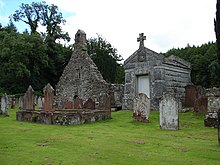
Samuel Rutherford (1600-1661) was a Scottish theologian and pastor whose life and writings were profoundly shaped by his Reformed faith. His enduring legacy stems from his defense of Presbyterianism, his influential works, and his remarkable letters that showcase his unwavering devotion to God.
A turbulent time to live.
Samuel Rutherford was born in 1600 and died in 1661. These were turbulent years. They witnessed the reigns of the three most despotic Stewart kings, James VI, Charles I and Charles II.
They also lived through:
- The signing of the National Covenant in 1638;
- The English Civil War;
- Deliberations of the Westminster Assembly;
- The beheading of the King;
- The occupation of Scotland by Cromwell’s army;
- The restoration of Charles II in 1660.
No other period in British history saw such upheaval.
The early life and education of Samuel Rutherford
Samuel Rutherford was born in the village of Nisbet, Scotland. His father may have been a farmer of a miller. Based on some of his quotations, he apparently lived a rather careless life during his youth.
He was educated at Jedburgh Grammar School, entered the University of Edinburgh University in 1617, began his theological studies in 1626, and was licensed to preach in 1627.
Rutherford was assigned the rural county parish of Anwoth in Scotland. There was no village near the small church; the congregation was scattered among the surrounding farms. The church building looked life a barn, about sixty feet by twenty feet in size. It probably could not have seated more than 250 people. Yet, Rutherford ministered there for nine years.
Though his congregation was small, Rutherford was devoted to his flock. He was known to rise as early as 3 A.M. to begin praying, studying, and caring for the spiritual needs of his congregation.
Personal tragedy
In 1630, after barely five years of marriage, Samuel’s wife died. She had suffered a painful illness of thirteen months, and Samuel was deeply affected by her loss. The Rutherfords’ two children also died, and Samuel himself had a debilitating fever three months before his wife’s death. Rutherford’s many sufferings only gave him a greater heart of sympathy for the suffering in his flock.
Religious persecution
Rutherford lived during a time of religious persecution in Britain, and many were leaving for the new land of hope, America. Rutherford, however, remained to fight the spiritual battles in Scotland. In 1636, he published an Apology of Divine Grace against the heresies of a righteousness based on human works that was then spreading through the land. This work offended the government and Bishop Laud, who then controlled the established churches of Britain.
A time of exile
So, Rutherford was put out of his church. However long the Lord chose to keep him in exile at Aberdeen, Rutherford would not question Him. In a letter to one of his flock at Anwoth, Rutherford wrote, “It is not for us to set an hourglass to the Creator of time.”
Though it appeared Rutherford’s service for the Lord was being restricted by his confinement, in reality his usefulness increased. The hundreds of letters he wrote to members of his congregation at Anwoth and to fellow-Christians were full of encouragement and loving devotion to Christ. (Also see the works of Samuel Rutherford.)
Rutherford had an intimate communion with the Lord which he was not afraid to talk about. He wrote always of Christ, not just of the blessings and work of Christ, but of the wondrous glory of His Person. His letters are full of anticipation of Christ’s coming, as Rutherford eagerly awaited the “Marriage Supper of the Lamb.” Rutherford’s letters were published after his death; they are still in print and continue to minister to Christians.
After a year and a half exile in Aberdeen, Rutherford returned to Anwoth to resume a life of preaching and teaching. The commission of the Glasgow Assembly designated him Professor of Divinity at St. Mary’s College. He agreed to the office under the condition that he would be permitted to regularly preach. He then became a collegue of Robert Blair in the city pulpit.
Representative to Westminster Assembly in London
In 1643, Rutherford left for London as one of the four Scottish Commissioners to the Westminster Assembly. While there for the next four years, he preached before long parliament. He also took part in the Assembly’s debates on theology and the form of Church government, and he was a major author of the Shorter Catechism.
While a member of the Westminster Assembly, Rutherford published five major books. One of those books was called “Lex Rex“, or The Law of the Prince (or King). The book challenges the divine right of kings, emphasizes the rule of law and limited government, and provides a theological and legal framework for resistance to tyranny. It had a significant influence on political thought and the development of constitutionalism in later centuries.
Charged with treason
In 1647, Rutherford returned to St. Andrews to resume his duties. He was soon made Principal of St. Mary’s College (later merging to become St. Andrews University), and in 1651 he became Rector of the University.
After the English Civil War and the period of the Commonwealth, King Charles II was restored to the throne in 1660. This marked the return of monarchy and the reestablishment of the Anglican Church as the state church in England. Charles II aimed to extend his control over the Church of Scotland and align it with the Anglican Church.
But when Charles II became King, following Cromwell‘s rule, “Lex Rex” was deemed heretical and dangerous. It challenged the “Divine Right of Kings” and insisted that everyone including the king was subject to law. This was a radical idea at the time. Copies of the book were confiscated and publicly burned in 1661, and Rutherford was deprived of his offices.
Rutherford was summoned to appear before Parliament under charges of treason. However, he was on his deathbed at that time. So, he replied to Parliament’s summons by saying, “I have got a summons already before a superior judge and judicatory, and I behoove to answer my first summons, and ere your day come I will be where few kings and great folks come.” He died on March 29, 1661, before the charge could be tried. He is buried in the churchyard of St. Andrews Cathedral.
Reflections on the life of Samuel Rutherford
Faithful service to God requires full commitment
Service to God and Christ is a work of love that demands the best we have to offer Him, and trusting that God will produce the fruit he desires out of our labor of love.
Rutherford was assigned to minister in a rural parish, without even a village to serve as its focal point. Yet, he ministered there for nine years, despite that he seemed to be producing little fruit. After two years in his ministry, he wrote, “I see exceedingly small fruit in my ministry. I would be glad of one soul, to be a crown of joy and rejoicing in the day of Christ.” Despite this apparent barrenness, he would rise at three every morning for prayer and bible study. And others would say about him, “He is always praying, always preaching, always visting the sick, always catechising, always writing and studying.”
Never seek a better place to serve God until He directs you there.
Regardless of our plans, God will direct our steps in whatever way that pleases Him. Since His thoughts and plans are so much greater than ours, we should remain doing what God has appointed us to do until He directs us to serve Him in another way.
Rutherford never sought to put himself into a larger place. He wanted to be where God wanted him to be. In 1631, he wrote, “His own hand planted me here. And here I will abide till the great Master of the Vineyard thinks fit to transplant me.” When God did “transplant” him, it was not in the way he anticipated. For he was exiled to Aberdeen and forbidden to preach anywhere in Scotland. However, this became the occasion when he would write the most spiritual devotional books and letters ever written. Most of his works have been preserved even to this day, and have inspired those who have read them.
When faced with controversy, steadfast faithfulness to the truth matters
Certain battles are worth the fight. Since it’s never wise to go against conscience, there will undoubtedly be times when the strength of our convictions will be tested. It’s in those times that we must remain faithful in do what we know to be right.
In 1636, Rutherford published a book entitled An Apology [Argument] for Divine Grace. His argument was against the heresy of righteousness based on human works. This work offended Archbishop Laud, who controlled the established churches of Britain, and exiled Rutherford to Aberdeen. He forbade him to preach anywhere in Britain.
When Rutherford wrote the book Lex Rex, he surely knew that anyone writing against the Monarch would face persecution. Yet he firmly believed that only God has absolute authority, and the king’s relationship with his subjects should be one of faithful service to them rather than tyranny. He had the courage to overcome any fear he might have held. As expected, the book produced such a backlash that it might have resulted in martyrdom. However, he ended up dying before he could ever be tried for treason.
Devotion to Christ
Jesus Christ has broken down the barrier that separates people from one another and between people and God (See Ephesians 2:14-18). By doing so, Christians have received the forgiveness of sins that alienated us from God and the promise of eternal life with God and His Son Jesus Christ. The Lord has accomplished for us what we could not accomplish on our own. He has given to us that ultimate hope, which we were helpless to achieve on our own. Only Christ could do it, for He is the only God-man. And He was willingly to sacrifice Himself–even unto death–for the joy set before Him (Hebrews 12:2).
Therefore, He is deserving of all our love and devotion. Paul expressed it beautifully: “I have been crucified with Christ and I no longer live, but Christ lives in me. The life I now live in the body, I live by faith in the Son of God, who loved me and gave himself for me” (Galatians 2:20). To learn more about what He has done for us, visit my blog How to Begin Your Life Over Again, and click here to hear the Gospel.
Sources and related posts
Sources
Warren W. Wiersbe. 50 People Every Christian Should Know: Learning from Spiritual Giants of the Faith. Baker Books, Grand Rapids, MI. 2009 (Ebook edition created 2015). Samuel Rutherford (Chapter 2).
Samuel Rutherford’s Lasting Legacy, May 3, 2010, Retrieved from: https://www.christianity.com/church/church-history/timeline/1501-1600/samuel-rutherfords-lasting-legacy-11630048.html
Donald Macleod. Samuel Rutherford, 2017. Retrieved from https://donaldmacleod.org.uk/dm/samuel-rutherford/
Samuel Rutherford, Banner of Truth USA. Retrieved from https://banneroftruth.org/us/about/banner-authors/samuel-rutherford/
Samuel Rutherford, The Digital Puritan, 2011. Retrieved from http://digitalpuritan.net/samuel-rutherford/#:~:text=Rutherford%20was%20also%20known%20for,posthumously%20published%20Letters%20(1664).
Samuel Rutherford, (nd), Retrieved from https://en.wikipedia.com/wiki/Samuel_Rutherford